
2026-11-09
NAD+ (NJ500 / NJ1000): The Redox Coenzyme in Our Catalog and How It Ships
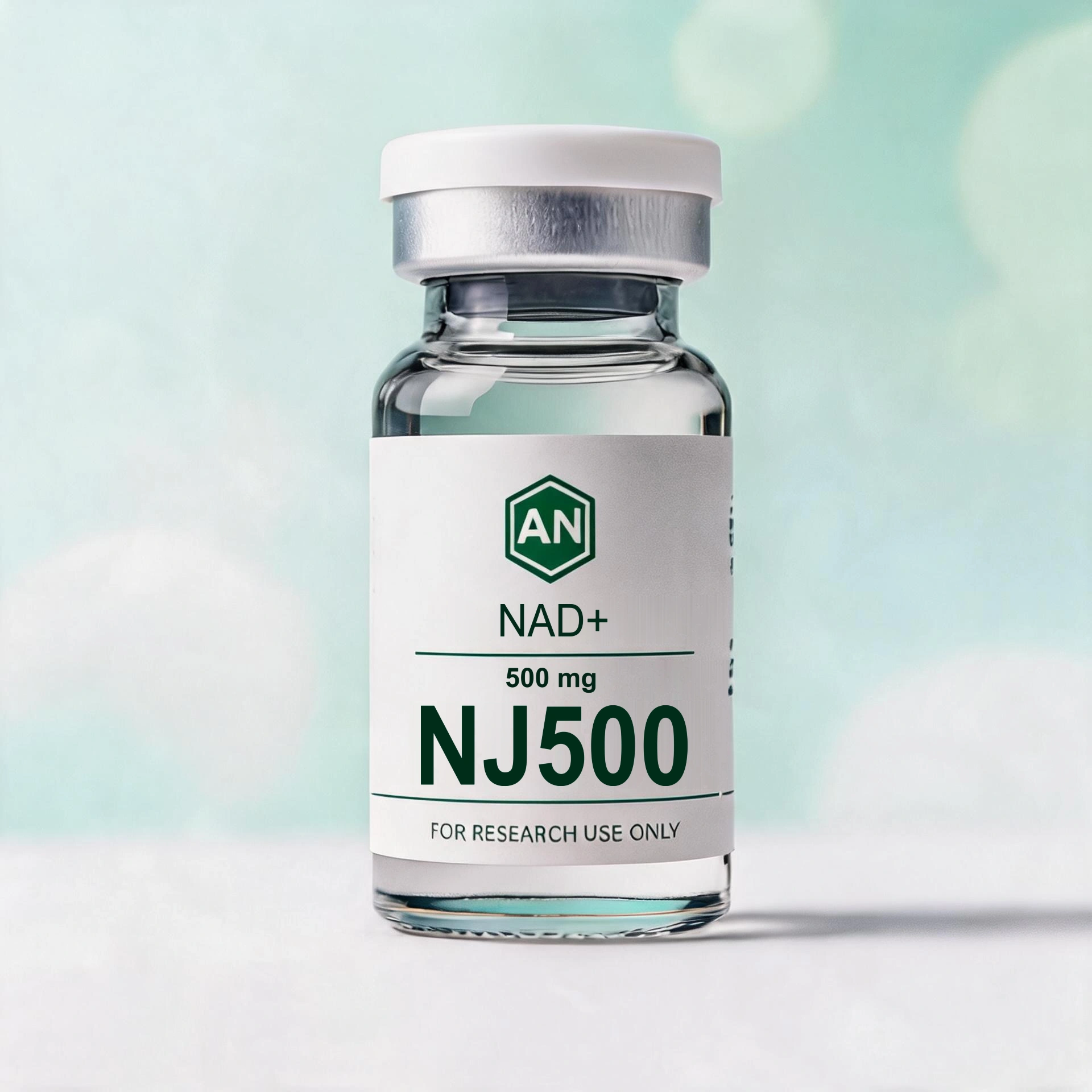
Visitors sometimes ask why a dinucleotide coenzyme sits in a peptide catalog next to BPC-157 and TB-500. The answer is practical: laboratories that run peptide programs rarely study the molecules in isolation, and metabolic assays almost always need a redox cofactor on the shelf. In the AN-PEPTIDE catalog that role belongs to NAD+, offered in two pack sizes — item NJ500 (NAD+ 500mg) and item NJ1000 (NAD+ 1000mg), each a ten-vial pack of lyophilized powder shipped on cold chain. This article explains what the coenzyme does, where research demand concentrates, how the two items differ, and why its shipping profile is not the same as the peptides around it.
One molecule, two states
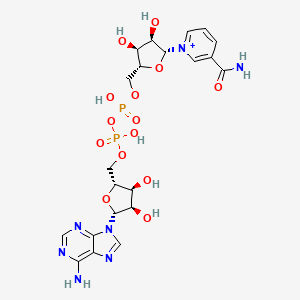
NAD+ — nicotinamide adenine dinucleotide, CAS 53-84-9, molecular formula C21H27N7O14P2 — is built from two joined nucleotides, which is where its name comes from. Its working life is a continuous round trip: the molecule accepts electrons and hydrogen in one reaction, becoming the reduced form NADH, then hands them over in another reaction and returns to NAD+. Every pass of glycolysis, every turn of the citric acid cycle, and every step of the mitochondrial electron transport chain leans on this shuttle. When you buy NAD+ for a metabolic assay, you are really buying one half of a reversible pair — which is why protocol design usually specifies the NAD+/NADH ratio rather than treating either form as a standalone reagent.
Beyond its classic electron-carrier job, the oxidized form is consumed as a substrate by two enzyme families that attract sustained research attention: sirtuin deacylases and PARP enzymes involved in cellular stress responses. That dual role — metabolic cofactor and enzyme substrate — is a large part of why demand for the compound keeps growing in bioenergetics laboratories.
Where the research demand actually is
Orders for NJ500 and NJ1000 tend to come from four kinds of programs. Energy-metabolism groups quantify ATP flux and cofactor turnover in cultured cells and isolated mitochondria. Redox-biology teams trace oxidation–reduction balance and oxidative stress markers across experimental conditions. Mitochondrial-function labs measure respiration and electron-transport activity in biochemical assays where NAD+ availability is the rate-limiting variable. And enzymology groups use the coenzyme to characterize sirtuin and PARP activity, since those enzymes stop working the moment the oxidized pool runs out.
The compound is fully water-soluble and behaves well in buffered aqueous systems, which makes assay preparation straightforward — no special organic co-solvents are needed, and it slots into standard enzymatic workflows without adaptation.
NJ500 or NJ1000: choosing a pack size
Both items contain the same compound from the same synthesis and release process; they differ in fill size and in the batch-specific purity figure published on each product page:
| Specification | NJ500 | NJ1000 |
|---|---|---|
| Compound | NAD+ (nicotinamide adenine dinucleotide) | NAD+ (nicotinamide adenine dinucleotide) |
| CAS | 53-84-9 | 53-84-9 |
| Molecular formula | C21H27N7O14P2 | C21H27N7O14P2 |
| Purity, published batch COA | 99.31% (HPLC) | 99.08% (HPLC) |
| Presentation | Lyophilized powder | Lyophilized powder |
| Pack | 500 mg per vial × 10 vials | 1000 mg per vial × 10 vials |
| Shipping | Cold chain | Cold chain |
| Release testing | HPLC purity + identity verification | HPLC purity + identity verification |
Higher-throughput laboratories running assay series across multiple months usually standardize on NJ1000 — fewer vials to log, one batch number to track. Evaluation-scale programs more often start with NJ500.
Storage and shipping: what makes NAD+ different from the peptides
Lyophilized peptides tolerate ordinary cold storage well; NAD+ is more sensitive. The oxidized form prefers a cool, dry, dark environment, and the container should be sealed tightly and opened as few times as possible — repeated exposure to air and humidity is the main avoidable cause of degradation. Plan your aliquots before the first vial is opened, exactly as you would for a peptide, so the stock spends its shelf life sealed rather than cycling between bench and storage.
The other difference is transport. While most catalog items ship at ambient temperature, both NJ500 and NJ1000 leave our facility on cold chain: the material is kept at controlled low temperature from packing through hand-off, which protects the cofactor through the longest transit legs. When you receive the pack, move it promptly into dry cold storage rather than letting it sit at room temperature.
What your batch documentation contains
Every NJ500 and NJ1000 order ships with a batch-specific Certificate of Analysis: item code and batch number, analysis date, the measured HPLC purity for that batch, identity verification results, and storage guidance. The purity figures quoted above are drawn from the batches published on the NJ500 and NJ1000 product pages; the COA enclosed with your vials is the authoritative record for the material you actually received. A third-party COA can be attached to the shipment on request. For a line-by-line walkthrough of how we verify batches, see Third-Party COA Verification: What We Test and Why and How Every Batch Is Verified.
Ordering
NJ500 and NJ1000 are in regular stock. Request a quote through the inquiry form on either product page or the contact page, or message the team on WhatsApp during business hours — including the item code, pack quantity and destination country gets you a quote fastest. In-stock orders leave our facility within 72 hours; international transit typically takes 7–15 working days, and MOQ stays flexible for evaluation-scale programs.
All AN-PEPTIDE products, including NAD+ (NJ500 and NJ1000), are supplied for laboratory research use only. They are not drugs, foods, cosmetics or dietary supplements, and are not approved for human or veterinary use, therapeutic applications, or medical treatment. Buyers are responsible for confirming that research use of these materials is permitted in their jurisdiction.